

Coon Rapids, Minnesota, experiences a humid continental climate characterized by distinct seasonal variations. Residents and visitors can expect warm, wet summers and cold, snowy winters, with temperatures ranging from lows of 9°F in winter to highs of 83°F in summer. The warm season typically spans from late May to mid-September, while the cold season lasts from late November to early March.
Seasonal Weather Patterns
Spring
Spring in Coon Rapids brings a gradual warming trend. Average temperatures rise from lows of 22.3°F in March to highs of 55.4°F in April. This season also sees increased precipitation, with April averaging 3.07 inches of rainfall.
Summer
Summers are warm and wet, with July being the hottest month, averaging highs of 82.8°F. June typically receives the most rainfall, averaging 4.71 inches, contributing to the lush greenery of the area.
Autumn
Autumn sees a gradual cooling, with October averaging highs of 57.8°F. Precipitation decreases compared to summer, averaging 2.72 inches in October.
Winter
Winters are cold and snowy, with January being the coldest month, averaging lows of 7.2°F. Snowfall is common, with December averaging 5.16 inches.
Environmental Initiatives
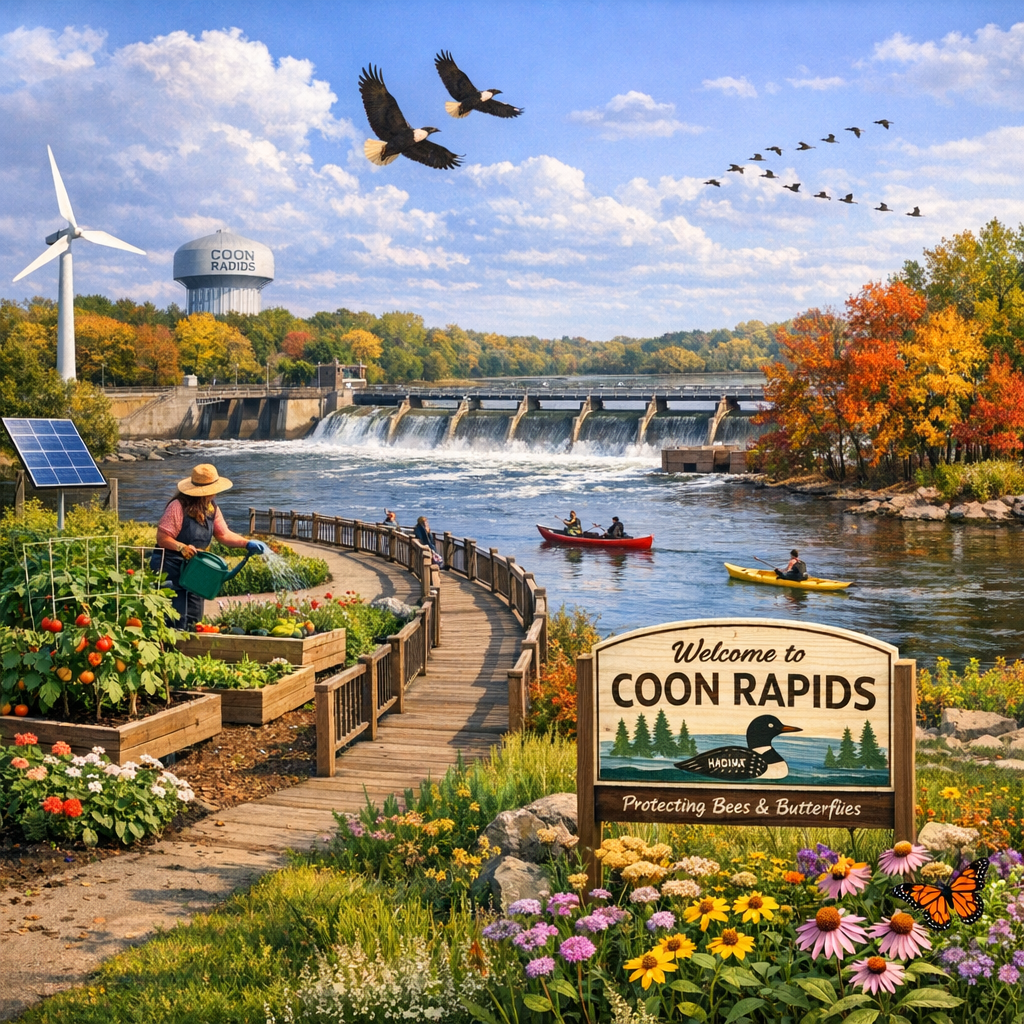
The City of Coon Rapids is committed to sustainability and environmental stewardship. Several initiatives have been implemented to protect and enhance the local environment.
Stormwater Management
The city’s Stormwater Program focuses on maintaining a separate stormwater system to prevent pollution of waterways. Regular street sweeping and maintenance of storm drains help manage runoff and reduce contaminants entering local water bodies.
Energy Action Plan
In 2023, Coon Rapids adopted an Energy Action Plan aiming to reduce greenhouse gas emissions by 35% by 2030. This plan emphasizes energy efficiency and renewable energy projects to benefit the community and environment.
Pollinator Protection
Recognizing the importance of pollinators, the city has established native planting areas in public parks to support bees, butterflies, and other pollinators. These efforts help maintain biodiversity and the health of local ecosystems.
Understanding Coon Rapids’ climate patterns and supporting the city’s environmental initiatives can help residents and visitors make informed decisions and contribute to a sustainable future.