

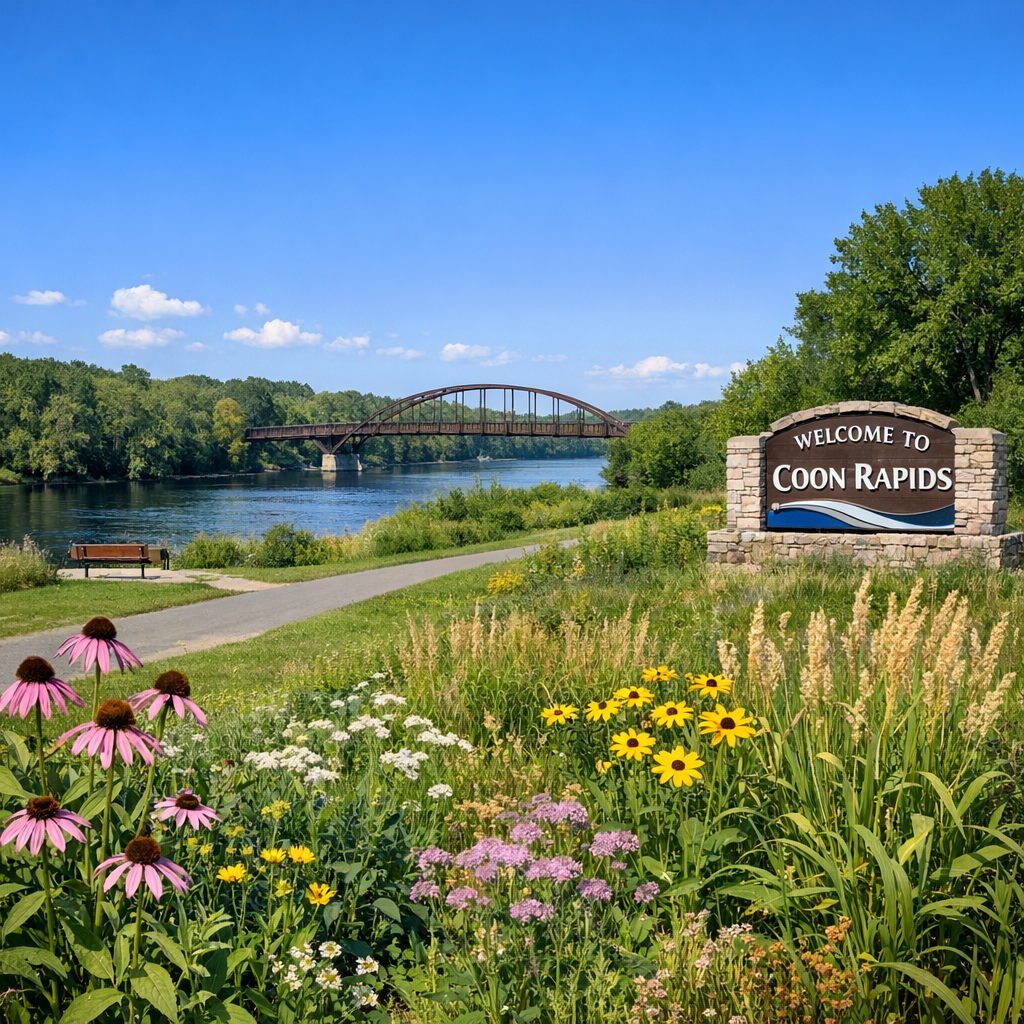
Coon Rapids, Minnesota, experiences a humid continental climate characterized by distinct seasonal variations. Residents and visitors can expect warm, wet summers and cold, snowy winters, with partly cloudy conditions prevailing throughout the year.
Seasonal Weather Patterns
The warm season in Coon Rapids spans approximately 3.9 months, from late May to mid-September, with average daily high temperatures exceeding 71°F. July stands out as the hottest month, boasting average highs around 82°F and lows near 63°F. Conversely, the cold season lasts about 3.3 months, from late November to early March, with daily highs below 36°F. January is typically the coldest month, featuring average lows of 9°F and highs of 24°F.
Precipitation is distributed throughout the year, with June often being the wettest month, averaging 3.78 inches of rainfall over approximately 16 days. Snowfall is common during the winter months, peaking in December with an average of 5.16 inches.
Environmental Sustainability Efforts
Recognizing the importance of environmental stewardship, Coon Rapids has implemented several initiatives to promote sustainability and protect natural resources.
Energy Action Plan
In 2023, the city approved an Energy Action Plan aiming to reduce greenhouse gas emissions by 35% by 2030. This plan focuses on enhancing energy efficiency and increasing the adoption of renewable energy sources, benefiting residents, businesses, and visitors alike.
Stormwater Management
Coon Rapids maintains a proactive approach to stormwater management through regular street sweeping, storm drain inspections, and curb maintenance. Residents are encouraged to keep streets free of debris to prevent pollution in local waterways.
Pollinator Protection
To support pollinator populations, the city has established native planting areas in public parks, featuring flowers and grasses indigenous to the region. These efforts aim to provide essential habitats for bees, butterflies, and other pollinators vital to local ecosystems.
By understanding the local climate and participating in these environmental initiatives, the Coon Rapids community contributes to a sustainable and resilient future.